Why Beautiful Photos Aren’t Enough
The Difference Between Taking Photos and Telling a Story
There are many photographers who can take a beautiful photo.
The light is right.
The composition is balanced.
The subject looks good.
And yet, when you look back at those images months or years later, something is missing.
Not because the photos weren’t technically strong — but because they didn’t hold anything.
Beauty fades when it isn’t anchored to meaning. What lasts is story.
Photography, at its highest level, is not about documenting what something looked like. It’s about preserving what it meant.
The Problem With “Pretty”
We live in an era of visual excess.
Every day, we consume thousands of images — curated, filtered, posed, perfected. Beauty has become accessible. Reproducible. Predictable.
Research in visual psychology shows that the human brain processes emotional imagery far more deeply than purely aesthetic imagery. We remember images not because they were visually flawless, but because they were emotionally charged — because they activated memory, empathy, or identification.
Your brain doesn’t remember perfection. It remembers feeling.
A photograph can be beautiful and still forgettable. A photograph that carries emotion becomes unforgettable.
A Good Photo Shows. A Story Makes You Feel.
There is a difference between seeing an image and experiencing one.
A good photo might show:
- A couple smiling
- A bride walking down the aisle
- A family gathered together
A story-driven photograph makes you feel:
- The nervous anticipation before the ceremony
- The weight of the moment when eyes meet
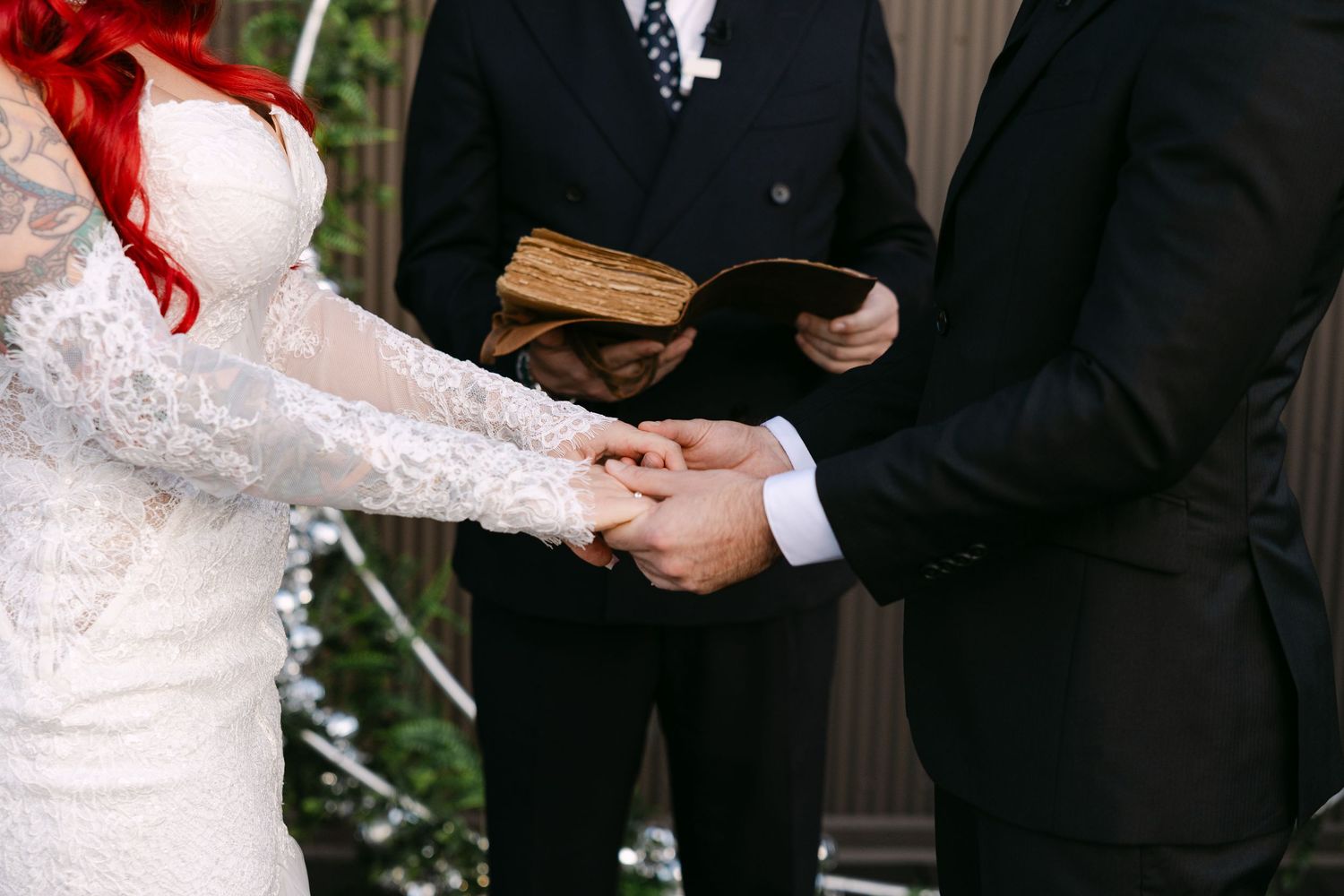
- The comfort of familiar hands in unfamiliar circumstances
This isn’t accidental.
Storytelling photography relies on emotional sequencing — the intentional capture of moments before, during, and after what most people think matters.
Because emotion rarely lives in the obvious moment. It lives in the breath before it — and the exhale after.
The In-Between Is Where the Story Lives
The most meaningful moments are often unscripted and unannounced.
A quiet hand squeeze. A shaky laugh. A glance that lingers half a second longer than expected.
These moments don’t ask for attention. They require awareness.
Someone who understands what matters before the moment happens — not just after it’s already gone.
These moments don’t wait for direction. They don’t pause for poses. And they don’t repeat themselves for the camera.
Storytelling is less about being everywhere and more about being present.
The Difference Is Intentional Seeing
Telling a story through photography means understanding rhythm.
Knowing when to step back and observe. Knowing when to move closer. Knowing when not to intervene.
It means reading people, not just light. Sensing when a moment is about to unfold — and trusting it enough to let it breathe.
This isn’t something you can fake or rush. It’s built through experience, patience, and a deep respect for human connection.
Why Experience Matters More Than Equipment
Most people assume great photography comes from great gear.
In reality, storytelling comes from experience.
Experience teaches you:
- How emotions unfold under pressure
- How people behave when they’re nervous, overwhelmed, or deeply present
- How to anticipate moments instead of chasing them
This is why two photographers can stand in the same room with the same camera and produce entirely different results.
One reacts. The other anticipates. One captures what’s obvious. The other captures what’s true.
Emotional Memory vs. Visual Memory
Cognitive research suggests emotional memories are often more durable and more vividly revisited than purely visual details.
This is why certain photographs stay with us — not because they were perfect, but because they’re tied to how we felt in that moment.
Story-driven photography intentionally aligns with this.
It prioritizes:
- Connection over control
- Authenticity over performance
- Meaning over trends
And as a result, those images age differently. They don’t expire when styles change. They deepen as time passes.
Why Over-Posed Images Often Fall Flat
Posing has its place. Direction has its value.
But when photography becomes overly managed, something important is lost.
People stop feeling and start performing. Moments become manufactured instead of experienced.
And while those images may look polished, they often lack emotional weight.
Storytelling photography creates space for people to be — not to act.
It understands that vulnerability, imperfection, and movement are not flaws. They are evidence of real life unfolding.
Storytelling Requires Restraint
One of the most misunderstood aspects of storytelling photography is that it often involves doing less, not more.
It means:
- Not interrupting sacred moments
- Not forcing emotion where it doesn’t belong
- Not inserting yourself into the story
The photographer’s role is not to be the center of attention. It is to protect the integrity of the moment.
To witness without intrusion. To guide without controlling. To observe with intention.
Why These Images Feel Different Years Later
Years from now, you won’t remember the exact pose you were standing in. You won’t remember the timeline to the minute. You won’t remember the curated details the way you think you will.
But you will remember:
- How your heart raced
- How time felt suspended
- How love felt loud and quiet all at once
Photographs rooted in story act as emotional portals. They don’t just show you who was there — they remind you who you were.
That is the power of storytelling.
Photography as Preservation, Not Performance
Story-driven photography is not about creating moments for the camera.
It’s about honoring moments as they exist.
It understands that legacy is not built through perfection, but through truth. Through feeling. Through presence.
Anyone can take a beautiful photo.
But telling a story — a real one — requires intention, emotional intelligence, and care.
And when you look back one day, what you’ll cherish most won’t be how everything looked.
It will be how deeply you felt it.